Son of the Soil
Tarique Rahman was born on November 20, 1965, into the very heartbeat of Bangladesh’s struggle for sovereignty and self-determination. He is the eldest son of Shaheed President Ziaur Rahman — the war hero who proclaimed the independence of Bangladesh during the Liberation War of 1971 and later founded the Bangladesh Nationalist Party — and Begum Khaleda Zia, who would go on to become the nation’s first female Prime Minister and serve three terms as head of government. His younger brother was Arafat Rahman.
The earliest years of Tarique’s childhood unfolded against the backdrop of a young nation finding its feet. His father, then President of Bangladesh, was leading the country through a period of reconstruction and nation-building. But on May 30, 1981, tragedy shattered the family forever: President Ziaur Rahman was assassinated by rogue military officers in Chittagong. Tarique was only fifteen. In a single night, he lost not just a father but the towering figure who had shaped his earliest understanding of duty, sacrifice, and patriotism.
Education became a refuge and a forge. Tarique attended BAF Shaheen School and College in Dhaka, an institution primarily serving children of military personnel, where the discipline and rigour of service life were woven into everyday learning. He passed both his Secondary School Certificate and Higher Secondary Certificate examinations with commanding results. He then enrolled at the University of Dhaka to study International Relations — a field that drew him into the political philosophy of Socrates, Plato, Aristotle, Hobbes, Locke, Rousseau, and Voltaire, alongside an in-depth study of the dynamics of democracy and economic liberalisation.
He graduated during a period of nationwide upheaval — the movement against the autocratic regime of General Hussain Muhammad Ershad, which his mother Khaleda Zia was leading from the front. The young graduate had already absorbed the lesson that would define his life: democracy is never given freely; it must be won, defended, and renewed by every generation.
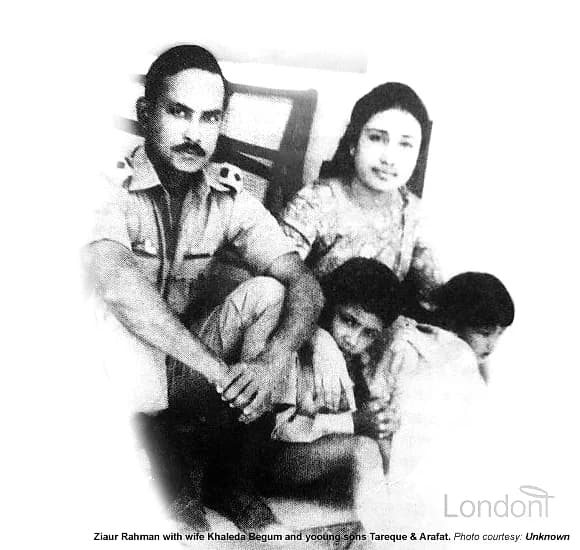
Before he could fully understand life, he lost his father. Yet from that loss, a son’s resolve was born — to carry forward the ideals for which Shaheed Ziaur Rahman lived and died.
Political Awakening
The late 1980s were years of fire and hope in Bangladesh. The mass movement to topple Ershad’s military-backed autocracy drew millions into the streets, and it was in this crucible that Tarique Rahman’s political identity was forged. In 1986, he defied house arrest to address the Dhaka Press Club, publicly denouncing Ershad’s staged elections. Two years later, in 1988, he formally joined the Bangladesh Nationalist Party — not in Dhaka’s corridors of power but at the grassroots level in Gabtali, Bogra, his father’s ancestral district.
His entry into politics was not the inheritance of privilege but a conscious act of conviction. While he could have claimed a seat at the top by birthright, he chose instead to build from the ground up — travelling to sub-districts and villages that rarely saw national figures, listening to farmers and day-labourers, understanding the Bangladesh that existed far from the capital’s elite drawing rooms. He learned the art of coalition-building by sitting in tea stalls, not boardrooms.
In 1991, Tarique campaigned tirelessly alongside his mother Khaleda Zia as the BNP swept to a historic electoral victory, returning parliamentary democracy to Bangladesh. Within the party, he championed institutional reform: in 1993, he introduced secret-ballot leadership elections in the BNP’s Bogra unit — an innovation that challenged the culture of managed consensus and signalled his belief that internal democracy must mirror the democracy the party demanded for the nation.
On February 3, 1994, amidst his growing political commitments, Tarique married Dr. Zubaida Rahman, a cardiologist trained at Dhaka Medical College and the daughter of Late Rear Admiral Mahbub Ali Khan, former Chief of Staff of the Bangladesh Navy and former Minister of Telecommunications and Agriculture. Their daughter, Zaima Zarnaz Rahman, would later become a barrister. Even as he built a family, Tarique was building something larger — a movement that would shape the nation’s future.
Rise to Leadership
The turn of the millennium marked Tarique Rahman’s emergence as one of the most influential political strategists in Bangladesh. He played a pivotal role in crafting the BNP’s election strategy for the 2001 general election, in which the party, leading a four-party alliance, returned to power with a commanding majority. His reward was not a cabinet seat but an organisational one: in June 2002, he was appointed Senior Joint Secretary General of the BNP, placing him at the nerve centre of the country’s largest political party.
Beyond politics, Tarique proved himself an accomplished entrepreneur, establishing successful ventures in the textile and agro-based industries. This practical experience with Bangladesh’s economic engine gave him a perspective on governance that many career politicians lacked — an understanding that policy must be grounded not in abstract ideology but in the lived realities of manufacturers, exporters, and workers.
Under his stewardship, the BNP underwent modernisation. He championed the use of technology in political organising, advocated for greater inclusion of women and young people in party decision-making, and pushed for policy platforms that addressed the real concerns of a growing middle class — affordable housing, quality education, healthcare access, and economic opportunity. He built networks of local leaders, established training programmes for party cadres, and created channels for policy debate that made the organisation more responsive to the electorate.
On December 8, 2009, even while in exile, Tarique was elected Senior Vice Chairman of the BNP — a role that formalised what had long been apparent: he was the strategic brain behind the party’s operations. Analysts noted that his approach combined the pragmatism of a seasoned organiser with the idealism of someone who genuinely believed in the transformative power of democratic governance.
A nation that silences its youth silences its own future. Bangladesh belongs to the dreamers and the doers — the millions who rise before dawn to build a better tomorrow.
Trial by Fire
On January 11, 2007, a military-backed caretaker government seized power in Bangladesh, launching a sweeping anti-corruption campaign that critics said was wielded as a political weapon. On March 7, 2007, Tarique Rahman was arrested without any prior notice of charge. What followed was eighteen months of captivity that would test the limits of human endurance.
During six rounds of remand totalling thirteen days, Tarique was subjected to what his family, lawyers, and international observers described as brutal physical and psychological torture. He appeared in court on a stretcher, his body bearing the marks of mistreatment. Political analyst Mohiuddin Ahmed later suggested the torture was designed to pressure his mother, Khaleda Zia, into leaving the country. The ordeal left him with severe spinal injuries that afflict him to this day.
Released on bail on September 3, 2008, with his health deteriorating alarmingly, Tarique departed for London on September 11, 2008, for urgent medical treatment. What was meant to be a temporary stay for recovery would become seventeen years and three months of exile. During the years of Awami League rule under Sheikh Hasina, a cascade of politically motivated cases was filed against him — including charges of money laundering, illegal wealth acquisition, corruption in the Zia Charitable Trust, and most gravely, orchestrating the August 21, 2004 grenade attack on an Awami League rally that killed twenty-four people. In 2018, a Speedy Trial Tribunal sentenced him to life imprisonment in absentia for the grenade attack.
The judiciary would ultimately vindicate him. On December 1, 2024, the High Court acquitted Tarique and all others in the grenade attack cases, finding that none of the 225 prosecution witnesses could identify who threw the grenades and that confessional statements were not made voluntarily. The Supreme Court’s Appellate Division upheld this acquittal. One by one, every major case fell away: the money laundering conviction, the Zia Orphanage Trust case, the illegal wealth case, the arms smuggling allegations, the Hawa Bhaban bribery case — all acquitted between December 2024 and May 2025. The scales of justice, however slowly, found their balance.
The struggle for democracy is not a sprint but a marathon, and the people of Bangladesh have proven themselves the most resilient of runners.
Exile & Resilience
For most political leaders, exile eight thousand kilometres from home would mean irrelevance. For Tarique Rahman, it became a crucible of reinvention. From London, he maintained an unbroken connection with the party faithful through virtual meetings, strategic directives, video addresses to rallies across Bangladesh, and a network of trusted lieutenants who carried his vision to every district and sub-district of the country.
His burden grew heavier with personal tragedy. On January 24, 2015, his younger brother Arafat Rahman Koko died suddenly in Malaysia — a loss Tarique mourned from a distance, unable to return home. Then, in February 2018, his mother Khaleda Zia was imprisoned in the Zia Orphanage Trust case. With the BNP’s founding family under siege, Tarique was named Acting Chairman on October 29, 2018. He would hold the party together through the darkest years of its history, directing its operations from exile while his mother endured imprisonment and deteriorating health.
The exile years were far from idle. Tarique cultivated relationships with think tanks, international organisations, and democratic movements worldwide. He articulated the cause of Bangladesh’s democracy before policymakers in Europe, North America, and across Asia. He championed the rights of Bangladesh’s garment workers, advocated for environmental protections in the climate-vulnerable delta nation, and promoted the country’s rich cultural heritage on the global stage.
In 2023, Tarique unveiled a landmark 31-point reform proposal — a comprehensive blueprint for governance reform that included establishing a bicameral parliament, introducing term limits for the Prime Minister, implementing a British-model healthcare system, guaranteeing judicial independence, and creating constitutional safeguards against autocracy. The proposal demonstrated that exile had not dulled his strategic thinking but sharpened it, giving him the distance to envision a fundamentally reformed Bangladesh.
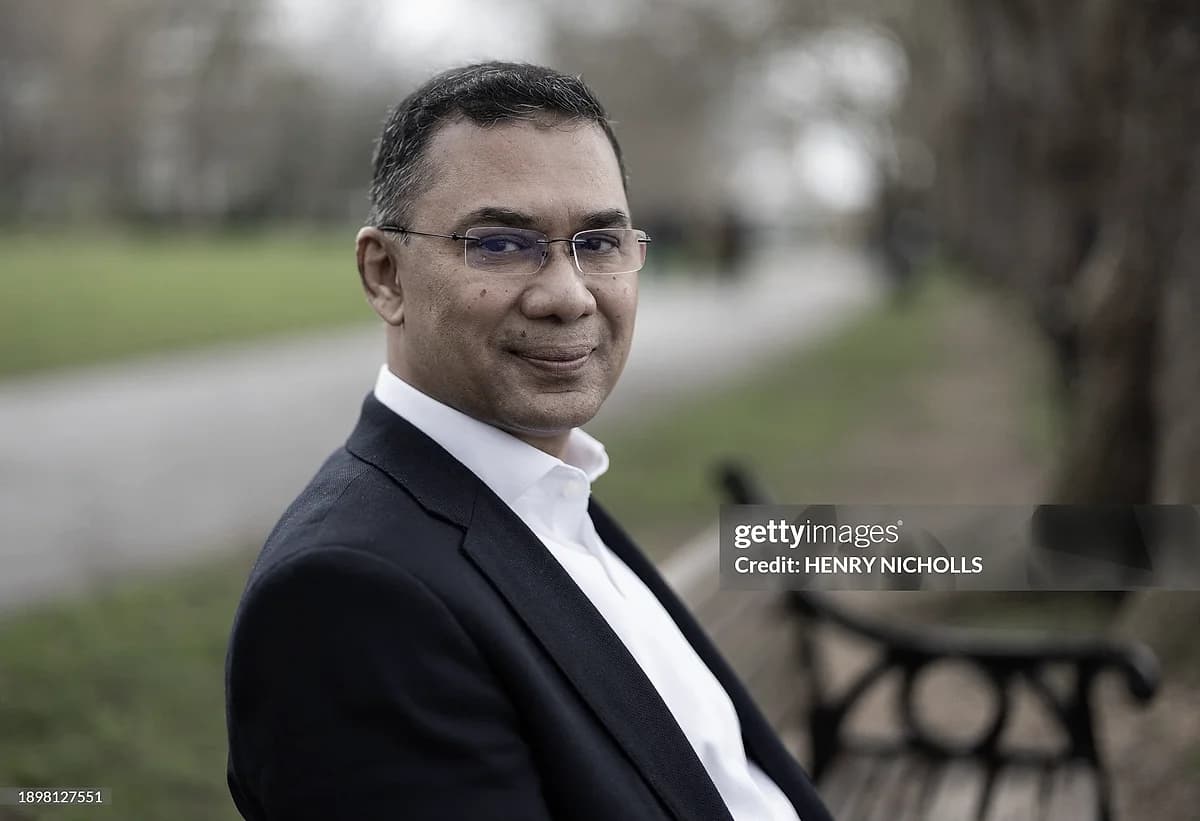
Exile has taught me that distance cannot diminish love for one’s homeland. Every river, every rice field, every face in every village — they are the geography of my heart.
The Homecoming
On August 5, 2024, a mass student-led uprising — the July Revolution — toppled the Awami League government, forcing Prime Minister Sheikh Hasina to resign and flee the country. The movement, driven by Bangladesh’s youth demanding an end to authoritarian rule, echoed the same democratic aspirations that Tarique Rahman had championed for decades. From London, he had played a significant role in galvanising the democratic movement that culminated in this historic moment.
With the Awami League’s fall, the politically motivated cases that had kept Tarique in exile began to collapse in the courts. Between December 2024 and September 2025, he was acquitted in every major case — the grenade attack, money laundering, the Zia Charitable Trust case, illegal wealth acquisition, arms smuggling, and bribery charges. The legal vindication was complete.
On December 25, 2025, Tarique Rahman stepped onto Bangladeshi soil for the first time in seventeen years. Arriving at Hazrat Shahjalal International Airport in Dhaka alongside his wife Zubaida and daughter Zaima, he removed his shoes and stood barefoot on the tarmac, bending to pick up a handful of earth in a gesture that moved millions. Hundreds of thousands of supporters lined the route from the airport, waving flags and chanting slogans. The BNP had mobilised an ocean of humanity to welcome home its leader.
But the homecoming carried the weight of sorrow. On December 30, 2025, just five days after his return, his mother Begum Khaleda Zia passed away at Evercare Hospital in Dhaka. Tarique’s grief was described by those close to him as a “silent sorrow” — wordless, profound, and deeply private. On January 9, 2026, he assumed the chairmanship of the Bangladesh Nationalist Party, carrying forward the legacy of both his parents into a new chapter of the nation’s history.
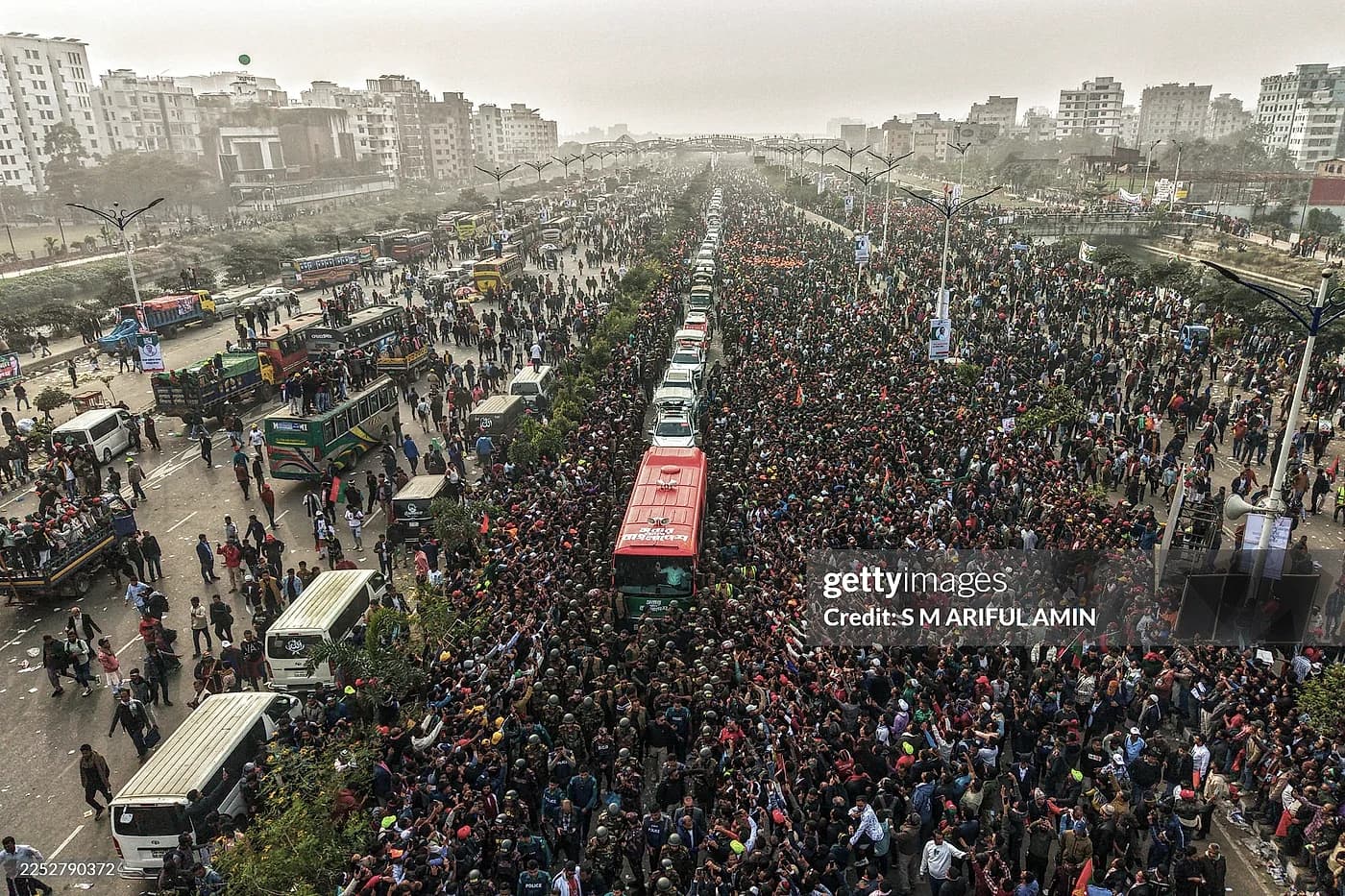
We choose reform, not revenge. We choose the rule of law, not the law of rulers. We choose a Bangladesh that belongs to all its people.
Vision for Bangladesh
At the heart of Tarique Rahman’s political philosophy lies a single, animating principle: reform, not revenge. His rhetoric deliberately avoids the language of retribution; instead, it centres on accountability, the rule of law, institutional reform, and social cohesion. His 31-point reform proposal and the BNP’s nine-key-pledge election manifesto together form the most comprehensive governance blueprint any Bangladeshi political leader has offered in a generation.
His economic vision is ambitious and specific. Under his “I Have a Plan” initiative, he has outlined a roadmap to create permanent employment for forty million young people and several hundred thousand women. He proposes diversifying the economy beyond the garment sector through demand-driven modern education, modernised technical and vocational institutions with international-standard certifications, and the establishment of “Super Sourcing Hubs” connecting Bangladeshi entrepreneurs to global e-commerce giants like Amazon, Alibaba, Shopify, and Walmart. His plan to introduce PayPal and establish regional e-commerce hubs aims to unlock Bangladesh’s digital economy for a new generation.
On governance, he advocates a bicameral parliament, constitutional term limits for the Prime Minister, depoliticised public administration through merit-based recruitment, the effective independence of the judiciary, and the formation of an Administrative Reform Commission to restructure the civil service. He has pledged to prevent enforced disappearances, guarantee press freedom, protect minority rights, and implement the July National Charter to ensure that the sacrifices of the 2024 uprising are not forgotten.
Perhaps most significantly, Tarique envisions a Bangladesh that honours the founding ideals inscribed in its constitution — democracy, justice, and sovereignty — not as aspirational text but as the living foundation of governance. His call for environmental sustainability, green recovery, and river restoration reflects a leader thinking not just about the next election but about the next generation. As Bangladesh prepares for its defining democratic moment, Tarique Rahman stands ready — shaped by sacrifice, tempered by exile, and guided by a vision of a nation that belongs to all its people.